
Greenville Previous Residents by Era
Different Greenville sources answer different pieces of a backward address trail. The county property search is a tax-year lead, while the Register of Deeds preserves recorded-document context. Historical directories and the census can place a household in a particular period. An obituary or estate record can close a family-history lead. Begin with the source that reaches the era you need, then compare it with the next source rather than treating every name connected to a parcel as a resident.
| Source | Years it covers | Where held | What it shows |
|---|---|---|---|
| Greenville County Real Property Search | Tax-year selector 1995–2027 | County online property search | A selected-year property lead, not a complete ownership history |
| ROD deed and party indexes | Grantor, grantee, mortgagee, and mortgagor index 1787–present | Official Records Search and ROD counter | Recorded-party and property-description trail |
| County Historical Records | Underlying years vary by collection | Historical portal, catalogue, and originating offices | Conveyance, probate, plat, mortgage, judgment, and related books |
| Greenville directories | 1921–22 digitized volume; Hill and Polk runs; Historical Society holdings from 1883 | South Carolina Room, historical society, and digital collection | Time-specific name-to-address or address-to-listing clues |
| Federal census | Released after 72 years | National Archives and library databases | A household snapshot for an enumeration date |
| Greenville News obituary index | 1901–present | Online index, request service, and South Carolina Room microfilm | Death, family, cemetery, and alternate-name clues |
For a recent address question, start with the selected tax year and the parcel or map number. For an early address, move more quickly to deeds, historical books, a confirmed directory edition, maps, or census material. The table is an era map, not a promise that each source names every occupant.
Greenville Parcel PIN Starts the Trail
Greenville County Real Property Search accepts one nonempty criterion at a time. Its first screen offers Name, Street, Map No., Subdivision, Sales Sheet No., and a tax-year selector, with visible years from 1995 through 2027 plus coded or all options. For previous residents research, use the street field to find a bounded lead, then retain the map number or PIN and selected tax year. The form rejects a combined Name, Street, and Map No. search, so the parcel identifier is the handoff between steps.
Next, compare the parcel in Greenville County Maps. County Maps can find addresses and real estate, display and print descriptive information, create property reports, and compare multiple years of aerial photography. Its current software-transition notice says square-footage, bedroom, bathroom, and half-bath details may not be current. That warning makes a dated deed, plat, or counter verification important when a house-history conclusion depends on detail.
Do not equate a tax owner or mailing contact with a past household. A situs address is the parcel’s physical location. A mailing address is where tax communications go. The legal description is the lot, block, subdivision, or metes-and-bounds wording that identifies land in recorded documents. Those strings can differ without an error.
View the Greenville County Historical Records catalogue before selecting a historical collection.
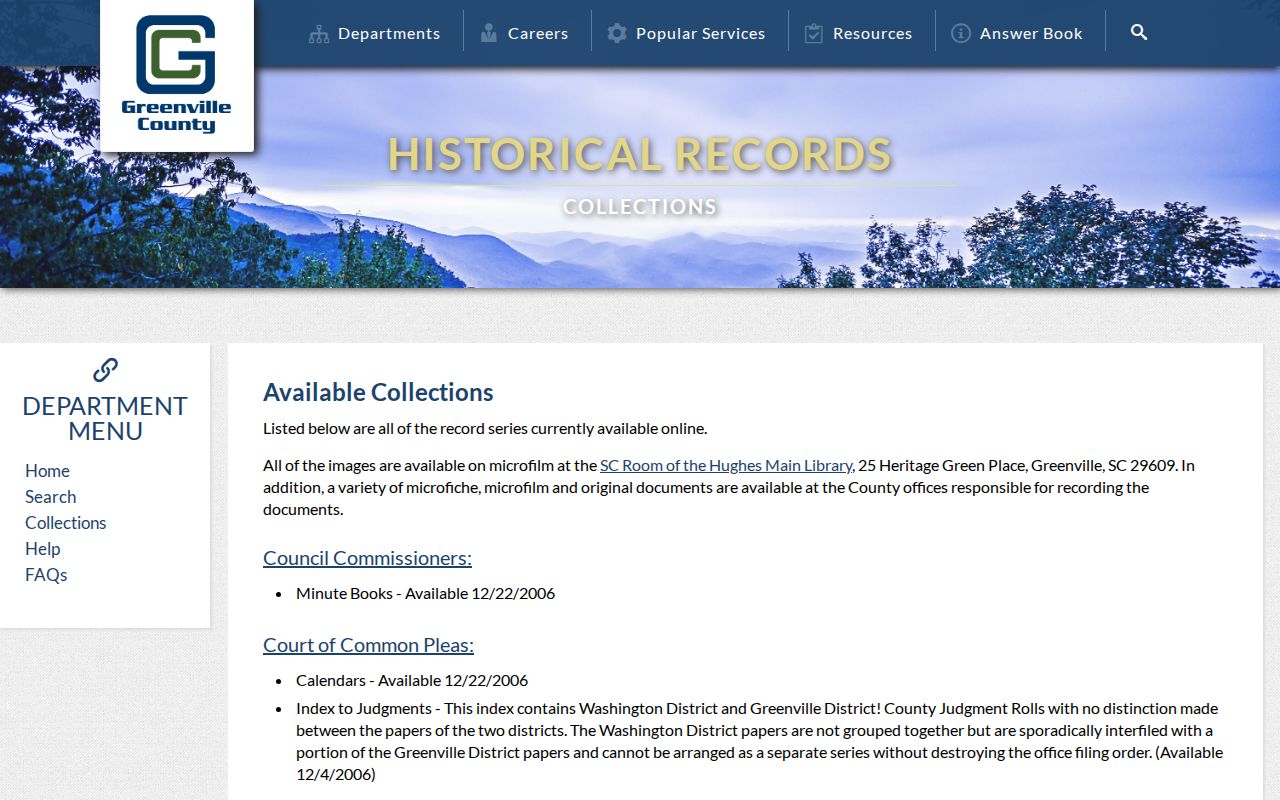
The catalogue names conveyance, probate, will, plat, mortgage, execution, jail, sale, and writ material. A collection notice is not the date of the records within it, so use the individual book or index description.
Note: Save the selected tax year and parcel identifier, because a property record is a dated lead rather than a complete house history.
Greenville Previous Residents and ROD Coverage
The Greenville County Register of Deeds is the recorded-document step in the address trail. County guidance reports grantor, grantee, mortgagee, and mortgagor name indexing from 1787 to the present. It reports deed images from 1787, plat images from 1903, mortgage images from 1919, and miscellaneous-document images from 1973. Plats are indexed from 1951 and federal liens from 1971. These are different coverage points, which is why a prior-owner search cannot be reduced to one modern address query.
The ROD search guidance directs users to the current public search, older deed-book images, Property Alert tools, and tutorials. The current PublicSearch interface requires free registration or sign-in according to the research capture. Search by party name, instrument number, book and page, legal description, or document-type filters as the live interface permits. When the needed item is not available there, use the historical route, ROD counter, or the relevant physical collection.
For counter, phone, or mail help, the ROD is at 301 University Ridge, Suite S-2100, Greenville, SC 29601, telephone 864-467-7240. Its listed weekday hours are 8:30 a.m. to 5:00 p.m., with recording before 4:30 p.m. Have an owner name or book and page ready. That is the practical fallback for a specific recorded document when the online index does not reach the needed item.
Open the County Historical Records search for the county’s separate historical gateway.
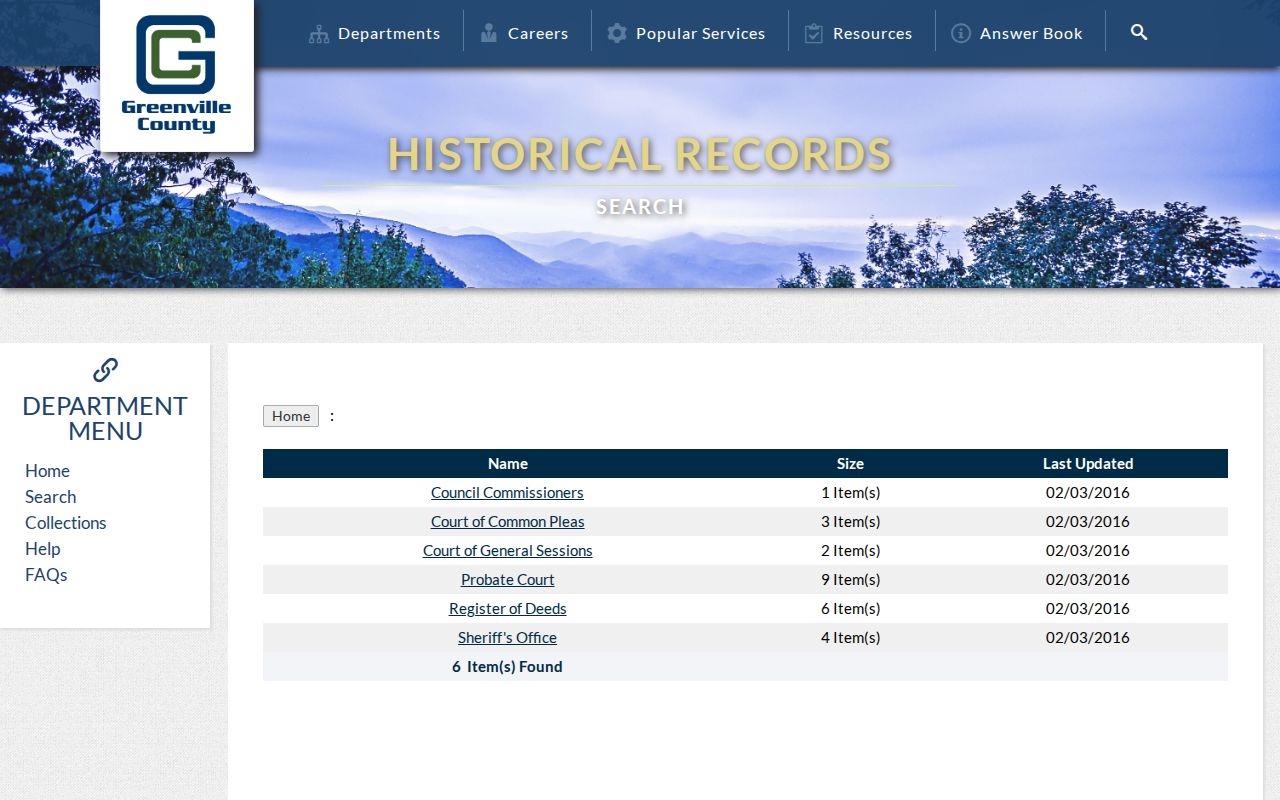
The historical gateway complements, rather than replaces, the current ROD search. Its digitization is incomplete, so counter, book, microfilm, and library routes remain part of a careful trail.
Greenville Deed Books Before 1985
Older Greenville deeds need a different search method. The ROD’s pre-1985 tutorial moves through index type, date range, surname or company index, a page-number file, book and page, then document type and book-page. The tutorial uses 0000 for the surname or company index-file step. It also warns that deed and mortgage image filenames follow the microfilm sequence rather than the deed page, while plats are named by page.
County guidance states that post-1985 records and all plats are online, with added deed material reaching 1940–84. For an earlier link, use the ROD navigation for “Deed Books Prior to 1800 High Res Images,” the County Historical Records Index to Conveyances, Plat, and Mortgage Books, or ROD staff and counter channels. Keep the book, page, instrument, legal description, and date in your notes. Those citations let another person reproduce the route without guessing from a street name alone.
Note: A record that lists a transfer party can support a property history, but it does not establish that the party lived at the address.
Trace Greenville Previous Residents Through Deeds
A chain of title follows transfers of the parcel, not a list of everyone who lived there. Start with today’s selected property record, then use the current owner, legal description, map number, or deed reference to identify the most recent conveyance. Read the named roles on that document, and make sure its land description matches the parcel before moving backward. A street address can be absent, changed, or included in a multi-parcel deed.
- Search the property record by one criterion and record the selected tax year, PIN or map number, legal-description clues, and any displayed owner or mailing fields.
- Use the owner or reference in the ROD index to find the recorded purchase document and its grantor and grantee roles.
- Confirm the legal description, subdivision, plat, or parcel clues before treating the document as the same property.
- Search the seller from that transfer as an earlier grantee, then repeat the comparison for the preceding document.
- When the online path stops, move to the historical index, older deed books, the ROD counter, or the South Carolina Room’s local-history support.
- Grantor and grantee
- The grantor is the party transferring an interest in the document. The grantee is the party receiving it.
- Chain of title
- A sequence of recorded transfers for a parcel. It needs legal-description checks and is not a legal title opinion.
- Legal description
- The land-identifying wording in a recorded document, such as lot, block, subdivision, or metes-and-bounds language. It is often more stable than an old street address.
The ROD does not perform title searches or give legal advice. If a legal ownership conclusion is needed, use the recorded references and obtain qualified advice rather than treating a quick index result as a title determination.
Greenville Past Residents Need Address Context
No authoritative Greenville street-renumbering or renaming conversion table was located in the research. Do not invent one when an old number fails. Instead, compare the historic street guide or map with the current parcel’s legal description, PIN, subdivision, plat references, and any historical/current street forms. City GIS documents a 1920 Sanborn layer and aerial years 1955, 1965, 1979, 1989, 1997, 2011, 2019, and 2021 in its historical-imagery configuration.
Maps can date a building, street pattern, or neighborhood change, but they do not identify a resident. The Library of Congress Sanborn collection is a catalogue route for fire-insurance maps, and Greenville sheet years must be verified in the catalogue or item list. Use dated plats and imagery beside the deed chain, not as a substitute for it.
Note: Compare a historic address with the legal description and plat references before deciding that it points to the same Greenville parcel.
Greenville Past Residents in Directories and Census
Deeds identify property parties. The household layer comes from dated directories, a released census, newspapers, and related local material. The South Carolina Room holds Greenville and Upstate history and genealogy resources, maps, newspapers, microform, and researcher support. Its digital and physical materials can help identify which directory, map, or local source fits an address. The detailed historical volumes belong on the Greenville city directories page, while an address trail should use only the edition that matches the period.
A useful household flow is: address or legal description, then a confirmed directory edition, then the closest released census, then an obituary, cemetery, probate, or deed follow-up where the dates agree. The census is public after 72 years and records a household on one enumeration date. A directory is a publisher’s compiled listing around publication. Neither replaces the transfer date on a deed.
- Find the exact directory year and copy the entry’s name, initials, address, and abbreviations.
- Move to a nearby released census and compare only the people and address context the census actually records.
- Check the next confirmed directory year for a move, a spelling change, or an omitted listing.
- Use a dated map, plat, or aerial image to test whether the address form still points to the same parcel.
- Close the trail with an obituary, cemetery, or probate lead only when its dates and names fit the household evidence.
Greenville Previous Residents at Trail Endpoints
The Greenville News obituary index covers 1901 to the present and connects to request service and South Carolina Room microfilm. Use a name with an approximate year, then apply its alternate-name, location, age, and war filters. An obituary can supply a death date, relatives, service or cemetery clue, and another spelling. It remains a newspaper source, so extract only what the notice actually states.
Probate and County Historical Records can be useful when an estate, will, guardian, trustee, bond, or account book connects a person to the property trail. The County Historical Records catalogue includes probate account, estate, will, and bond books. For state archival avenues, South Carolina Archives online research provides historical indexes and catalogue routes for county, court, land, and other records.
Explore the ROD copy and certification guidance before ordering a recorded document.
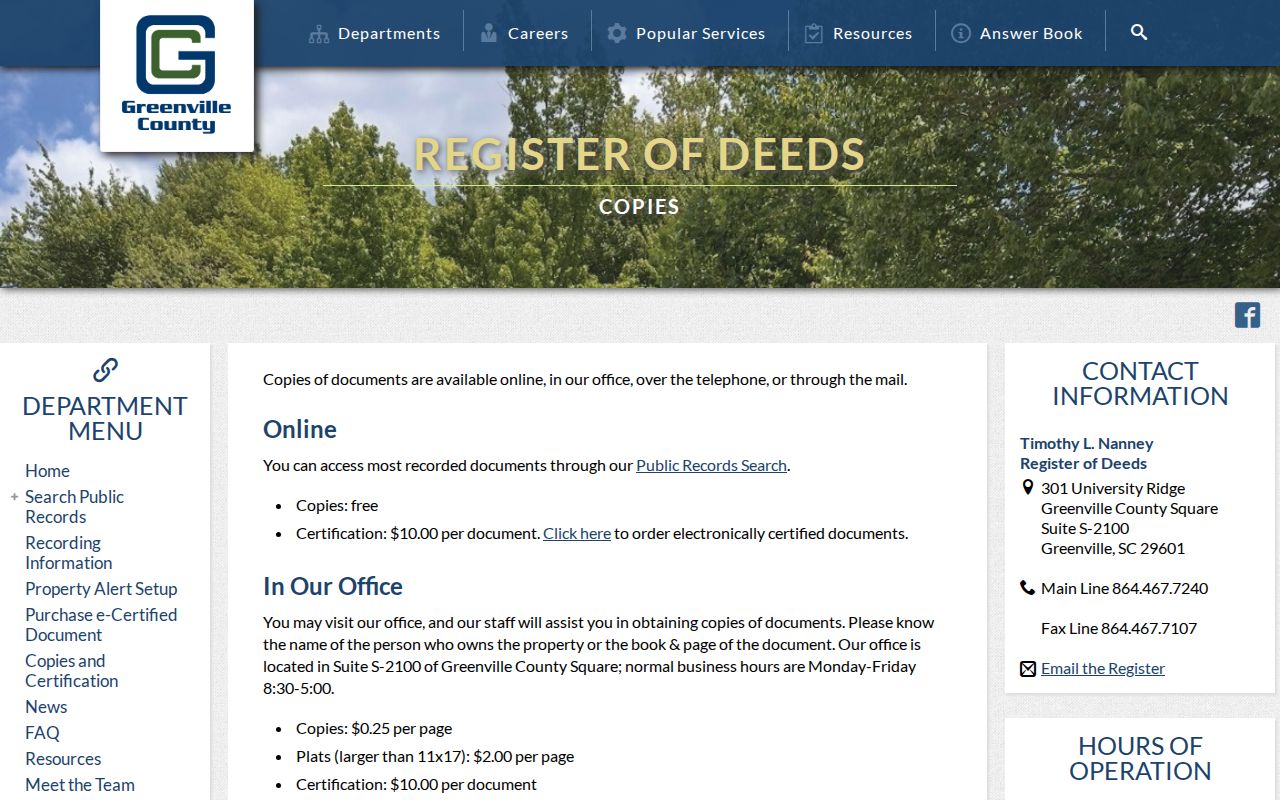
Online copies are generally free according to ROD guidance. E-certified copies are listed at $10 per document, and counter, phone, or mail copy prices vary by page, plat size, certification, and delivery method. Confirm the schedule before ordering.
See South Carolina Archives online research for its state-level historical search routes.
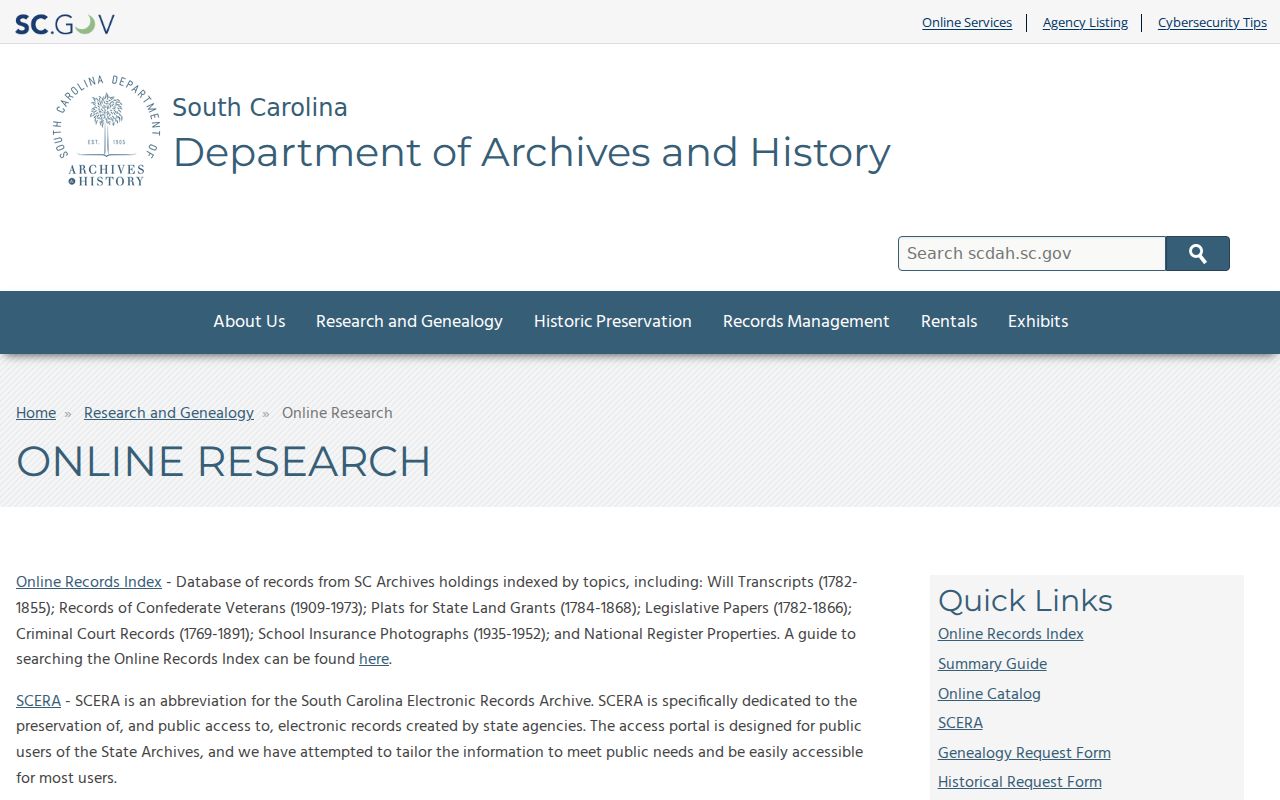
The state archives route broadens a local trail when county holdings point to land, court, or historical material beyond the immediately available Greenville records.
Greenville Previous Residents and Lawful Use
House history, family history, estate questions, and personal curiosity can support a careful search for past residents. The records do not create a right to trace or contact living people. Property records can distinguish a situs address from a mailing address, and many records do not identify every household member. Vital records, protected addresses, voter information, DMV data, and confidential court material have separate limits.
Lawful use. Use Greenville previous-resident material for historical and personal research, and never use a record trail to stalk, harass, or harm a living person.